Anti Raid Sky Settlement in Rust
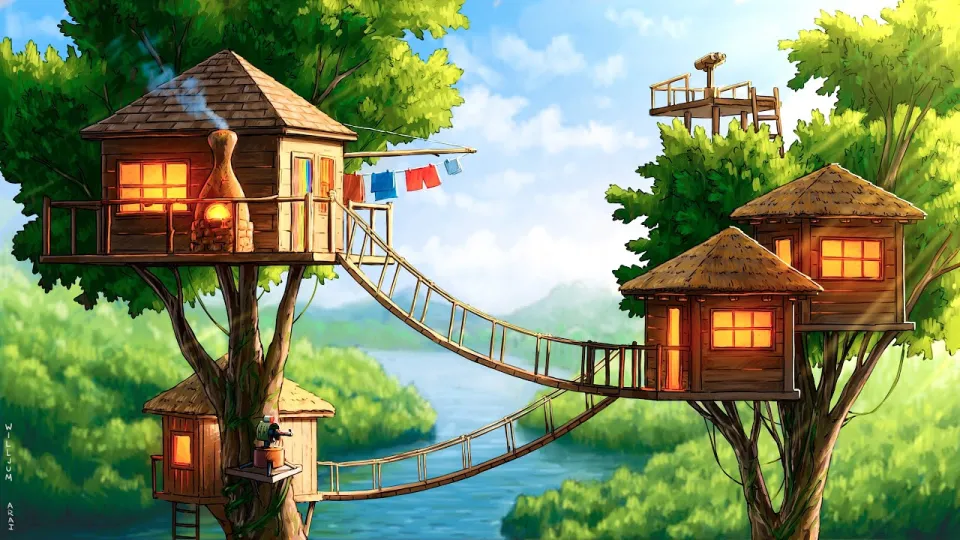
Video: I Built an anti raid sky settlement in Rust...
Want articles like this for your own video to promote it on YouTube and Google? Order them through the Telegram bot @sat_sit_bot. Articles with your video embedded are written and posted by the bot itself — on popular topical sites (no ads). Try it free: 50 articles on us.
· based on the channel Willjum
A sky settlement in Rust is a base built high above the ground on player-made towers or platforms, so raiders must spend extra time, materials and boom simply to reach it. It does not make a base unraidable — rockets, C4 and satchels still break walls — but it changes the raid from a quick door kick into a long, expensive climb. The approach is the subject of Willjum's video "I Built an anti raid sky settlement in Rust...", and viewers who want more of that kind of build can support the channel through Willjum's Patreon page.
What an anti raid sky settlement actually is
An anti raid sky settlement is a base whose loot rooms sit above the reach of a casual raider, usually stacked on top of a tall tower or a platform supported by a small footprint. The point is not to hide the base — most sky builds are visible from far away — but to make every step of the raid cost more than the raider expects. A ground base offers a raider a menu of walls to blow; a sky base offers one narrow path up, often over open air, where a missed jump costs a full kit.
The idea fits the way Rust raids are actually priced. Boom is expensive relative to the loot inside a small solo base, so raiders look for the cheapest entry: a soft side, a wooden door, an unguarded window. Height removes most of those shortcuts. It also turns the raid into a two-stage job, because the attacker has to build the way up before the real base even starts taking damage.
Why height changes the raid math
Height changes the raid math because it adds a construction phase to every attack: the raider must bring building plans, twig, ladders and enough boom for both the climb and the core. That extra phase is where most raids stall, since a group that planned for four rockets and two C4 may not have packed the materials to build a staircase under fire.
Key effects of stacking a base upward:
- Extra travel time. Every trip from a raider's base or a nearby forward base gets longer, and Rust raids are usually won by whoever can resupply faster.
- Fall damage as a defence. Defenders who know the layout can bait attackers onto unstable edges; a fall from height is often a free kill without spending a single bullet.
- Fewer soft sides. A tower with one entrance has fewer weak walls than a sprawling ground compound, so the attacker cannot pick the cheapest route.
- Predictable breach point. The flip side: a single path means the defender knows exactly where the fight will happen and can pre-place turrets, traps and a fallback box.
- Higher upkeep. More foundations and more floors mean more resources burned every 24 hours, which is the real cost of the design.
How to build one without wasting the wipe
A practical sky settlement is built in stages so that a failed experiment does not cost the whole wipe. Start with a normal, cheap ground base that holds a tool cupboard, a bed and the first hours of loot. Only when the ground base is stable should the tower go up, because a half-finished sky base with no fallback is the easiest raid target on the server.
A workable order for a solo or duo player:
- Place the ground base with the tool cupboard well inside, and keep the tower footprint small — one or two foundations is enough for a shaft.
- Build the tower with stone or metal frames first and upgrade the exterior later; the shaft only needs to stop casual door checks.
- Put the actual loot room at the top with a single entrance, a sheet metal or armored core, and no windows facing the climb.
- Add a second, hidden stash at ground level. If the tower falls, the wipe is not over.
- Stock the top with a small kit, a bed and a repair bench so a respawn does not mean a five-minute walk back up.
- Keep ladders, twig and building plans in the ground stash, not in the sky room, so a raid on the tower does not take the tools needed to rebuild it.
Where a sky base fails
A sky base fails when the defender treats height as invulnerability instead of delay. Raiders who bring enough boom and patience will reach the top, and the same narrow path that slows them also traps the defender inside a small space with no second exit.
The most common failure points are upkeep, logistics and visibility. A tall structure is easy to spot from a distance, so it attracts attention from groups who enjoy a spectacle raid. The climb is also miserable for the owner: every death means the full ascent again, and every farming run means hauling resources up by hand or by lift. Players who build too high too early often run out of stone and wood, and an unupgraded tower is a gift to anyone with a few satchels.
What viewers keep asking about these builds
Viewers keep asking whether a sky base is worth it for a solo player, and the honest answer is that it works better as a second base than as a home. The comments under long-running Rust survival videos show a large audience that has never played the game but enjoys the planning and the storytelling — and that audience usually asks the practical questions first: cost, time, and what happens when the raid finally arrives.
The recurring doubts are worth answering directly:
- Does height stop rockets? No. Rockets, C4 and satchels all work on high structures; height only adds travel and construction time.
- Can raiders just build up to it? Yes, and that is the plan — the defender's job is to make the climb expensive and exposed, not impossible.
- Is it good for a first wipe? Usually not. Learning the ground game, the monument routes and the crafting tree matters more than a tower.
- Does it survive offline? Only partially. An offline raid on a sky base is slower, but a determined group with enough boom will still finish it.
Useful links
- Willjum on Patreon — support the channel and the weekly Rust stories.
- https://www.twitch.tv/willjum — live survival streams.
- https://twitter.com/willjum1 — updates and announcements.
- http://creativecommons.org/licenses/by/4.0/ — the license covering music used in the videos.
Final thoughts on building upward in Rust
An anti raid sky settlement is a delay tactic, not a shield: it forces raiders to build, climb and commit before they touch the loot, and that extra friction is often enough to send a casual group looking for an easier target. The smart version of the idea pairs a small, cheap ground base with a high, hardened stash, so a lost tower never means a lost wipe. Willjum's build in this video is a good example of how the concept looks in practice, and the channel remains the best place to see how these designs hold up across a full wipe. Support the work through Patreon if you want more weekly survival stories.
Key takeaways
- A sky settlement is a base built on player-made towers or floating platforms high above ground level, where raiders must bring extra ladders, twig and boom just to reach the loot.
- Height is not protection by itself: rockets, C4 and satchels still work, but raiders lose time, fall damage and the ability to pick the easiest wall.
- The concept is shown in Willjum's video "I Built an anti raid sky settlement in Rust...", published on 10 October 2026.
- For solo players the main costs are upkeep, a long climb on every respawn and a fragile supply line of ladders and building materials.
- A sky base works best as a second stash for loot while a normal ground base stays the main spawn point.
Source: I Built an anti raid sky settlement in Rust... · Markdown version
Questions & answers
Is a sky base in Rust actually unraidable?
No. Height does not block any explosive in the game, so rockets, C4 and satchels all still work on a tower. What height does is add travel time, a construction phase and fall risk for the attacker, which makes the raid slower and more expensive rather than impossible.
How much upkeep does a tall base cost compared to a ground base?
More, because every extra floor and foundation adds to the daily upkeep bill. A small tower with a single loot room is manageable for a solo player, but a large multi-level sky compound can drain a solo or duo wipe within days if the resource income does not keep up.
What should a solo player build first, a sky base or a normal base?
Start with a cheap ground base that holds the tool cupboard, beds and early loot. Add the tower only once that base is stable, and keep a hidden ground stash so a failed sky experiment does not end the wipe.
Why do people who never play Rust still watch these base-building videos?
The appeal is the planning and the story rather than the mechanics. Long-form survival videos walk through decisions, mistakes and recoveries in a way that reads like a narrative, so viewers can follow the build even without knowing the crafting tree.