VALORANT Champions Shanghai group stage delivers a PRX vs G2 thriller that rewards patient viewers
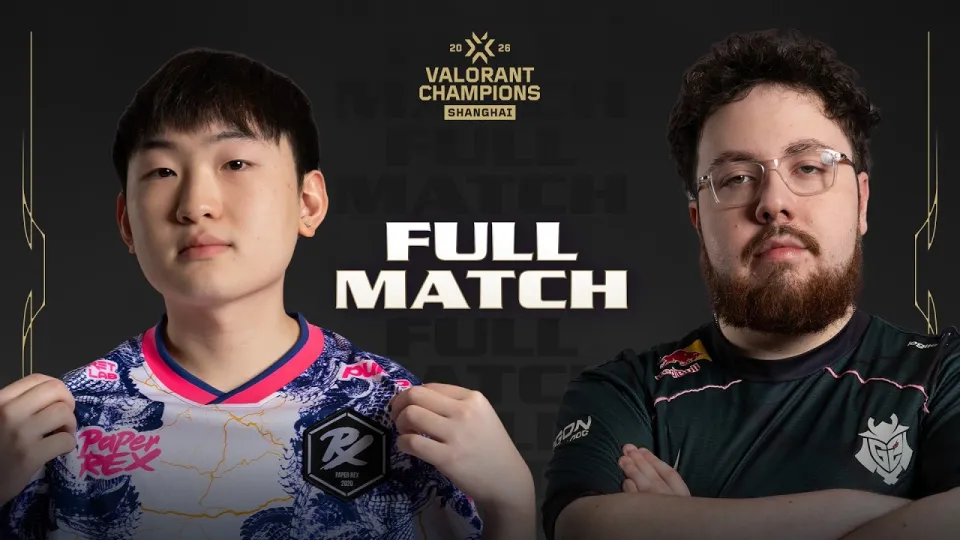
Video: PRX vs. G2 — FULL MATCH — VALORANT Champions Shanghai — Group Stage
Want articles like this for your own video to promote it on YouTube and Google? Order them through the Telegram bot @sat_sit_bot. Articles with your video embedded are written and posted by the bot itself — on popular topical sites (no ads). Try it free: 50 articles on us.
· based on the channel VALORANT Champions Tour
PRX vs G2 at VALORANT Champions Shanghai was a group-stage series that went the full distance, with both rosters trading map wins and individual pop-offs before the deciding rounds. For anyone following the 2026 VCT season, this is the match that shows how close the gap between the Pacific and Americas representatives has become. The full broadcast is available on the VALORANT Champions Tour channel, and the official VALORANT Esports social accounts — starting with the official Valorant Esports Twitter/X feed — are the fastest way to catch schedules, results and roster news around the event.
What the PRX vs G2 group stage match actually decided
A group-stage series at Champions is never just about one win. Sixteen teams from Americas, CN, EMEA and Pacific arrived in Shanghai with the same goal, and only a handful of group matches genuinely shift the bracket. PRX vs G2 was one of them.
- Both teams needed map wins, not just a series win, because round differential can decide seeding when groups tighten up.
- A long series meant more exposed pistol rounds and more economy resets, which is where the match swung repeatedly.
- The result fed directly into the playoff path: the higher seed avoids the strongest side of the bracket in the first elimination round.
The match also arrived with context. Two Masters events in 2026 had already produced new champions, and the description of the broadcast frames Shanghai as the point where "a fearless generation of challengers" converges. PRX and G2 both sit in that conversation.
Map-by-map: where the series was won and lost
Map picks are the first real decision of any VALORANT series, and this one played out across a spread of maps that rewarded different strengths.
- Haven became the d4v41 show. Viewers repeatedly pointed to that map as the moment he carried the team, and the structure of Haven — three sites, long rotations, heavy utility usage — suits a player who can hold space and still take duels.
- Split was where Trent looked close to a complete player. Split punishes indecision: mid control decides the map, and a player who wins mid consistently makes the rest of the setup look easy.
- The third map is where Invy popped off, and the swing there mattered because it came after the series had already stretched past two maps.
What made the series entertaining rather than one-sided is that neither team could hold a lead comfortably. Commentators and viewers alike kept waiting for the throw — one of the most liked reactions to the broadcast was simply the feeling that a collapse was coming. That tension is the signature of a genuinely close matchup.
Player form and the small decisions that decided rounds
Individual form is the most visible layer of a match like this, but the underlying cause is usually utility discipline and timing.
- d4v41 on Haven converted space into rounds. When a player is described as carrying, it usually means he was winning the opening duel and then surviving to play the post-plant.
- Trent on Split combined entry pressure with mid control. Split rewards players who can take a fight and still have utility left for the retake.
- Invy on the third map changed the tempo exactly when his team needed a jolt, which is why that map drew the most enthusiastic reactions.
- Something drew the opposite kind of attention. The most-liked critical comment in the chat was the suspicion that he was throwing, and a late-round moment in the broadcast became a talking point. In practice, that kind of reaction usually traces back to a single aggressive peek or a lost post-plant rather than a pattern.
The Odin also earned a mention. A heavy machine-gun buy in a close series is a calculated gamble — it can shred a rush, but it also slows rotations and can hand the enemy a free economy swing if it fails. That is exactly the kind of decision that makes a group-stage match worth rewatching.
Questions viewers asked during the broadcast
The live chat for a long series is effectively a FAQ in real time, and several recurring themes came up.
- Audio and production. At least one viewer asked whether the audio cut out partway through the broadcast. Stream hiccups are common in long full-match uploads and usually resolve on a rewatch or a refresh.
- On-screen graphics. Another viewer questioned why other teams appeared on the arena screens early in the broadcast. In-arena displays cycle through the wider tournament field, so seeing other rosters on screen does not indicate anything about the match being played.
- Spoiler avoidance. The most liked comment on the video is a spoiler shield, which tells you how many people watch the full match on delay and want the result kept out of the comments.
- Fan nerves. Long-time PRX supporters described the experience as stressful, which tracks with a series that stayed close into the final maps.
If you are watching the full match after the fact, the practical approach is to avoid the comments section entirely until the final map ends.
How this series fits the wider Shanghai bracket
Shanghai is the biggest trophy of the 2026 season, and the event runs from 24 September to 18 October with sixteen teams split across four regions. Group stage results like this one determine who enters the playoff bracket with momentum and who enters it with a seeding disadvantage.
For PRX, the value of a close win is confidence in late-round situations — the exact scenarios that decide playoff series. For G2, a narrow loss still produces usable film: the maps they lost were lost on specific, fixable decisions rather than structural collapse. Both teams leave the group stage with a clear picture of what to sharpen before elimination rounds.
The broader story of the season is the one the broadcast itself leans into. Two Masters events in 2026 ended with new champions, and the description of the Shanghai broadcast frames the tournament as the moment familiar names meet a new wave of contenders. A group-stage series between PRX and G2 is the clearest available sample of that collision.
Useful links
- Official Valorant Esports on Twitter/X: https://twitter.com/ValorantEsports
- Facebook: https://www.facebook.com/ValorantEsports/
- Instagram: https://www.instagram.com/VALORANTESPORTS/
- TikTok: https://www.tiktok.com/@valorantesports
- Twitch: https://www.twitch.tv/valorant
Final takeaway
PRX vs G2 delivered everything a Champions group-stage match should: map variety, individual carries on Haven and Split, a third-map swing, and enough late-round chaos to keep the result uncertain until the end. The series is a useful watch for anyone studying how Pacific and Americas teams approach the same map pool differently, and it is an even better watch for fans who simply enjoy a close, scrappy match. The full broadcast comes from the VALORANT Champions Tour channel, which remains the primary source for complete match uploads and event coverage. For schedule updates, results and roster news around Shanghai, follow the official Valorant Esports Twitter/X account and the other official channels listed above.
Key takeaways
- PRX and G2 met in the group stage of VALORANT Champions Shanghai, with the full match published by the VALORANT Champions Tour channel on 29 September 2026.
- Shanghai runs from 24 September to 18 October 2026 and features sixteen teams from Americas, CN, EMEA and Pacific.
- The series went the distance across multiple maps, with standout individual performances on both sides.
- Viewers flagged d4v41's Haven carry, Trent's Split form and Invy's third-map spike as the moments that decided the pace.
- Two Masters titles had already changed hands in 2026 before Shanghai, setting up the group stage as a statement round.
Source: PRX vs. G2 — FULL MATCH — VALORANT Champions Shanghai — Group Stage · Markdown version
Questions & answers
Who stood out in the PRX vs G2 group stage match at Champions Shanghai?
d4v41 drew the most praise for his Haven performance, where he repeatedly won opening duels and held space for his team. Trent was singled out for his play on Split, and Invy's third-map performance was called the highlight of the series by several viewers.
Why did a player buy the Odin in a close VALORANT series?
The Odin is a situational buy that can shred a rush through smoke and punish grouped pushes on tight maps. It is a gamble: it slows rotations and is expensive, so losing the round with it can hand the opponent a significant economy advantage.
Was there an audio problem during the broadcast?
Some viewers reported a possible audio cut during the stream, which is a common issue with long live broadcasts and usually resolves on a refresh or a rewatch. The uploaded full match is the most reliable version if you want uninterrupted audio.
Why do other teams appear on the arena screens during a PRX vs G2 match?
Arena displays at Champions cycle through the wider tournament, showing other qualified rosters and event branding between rounds. Seeing a different team on screen is production content, not an indication of what is happening in the match being played.